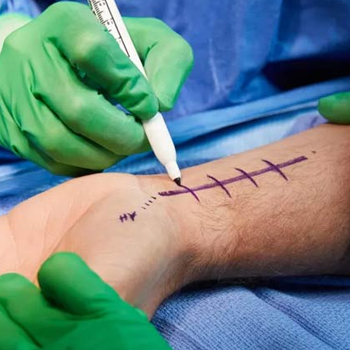


Hand and Microsurgery
Hand and microsurgery refers to specialized surgical procedures aimed at treating complex conditions of the hand, wrist, and upper extremities, often involving delicate tissues like nerves, blood vessels, tendons, and ligaments. These procedures are typically performed under a microscope (microsurgery) to ensure precision, especially when dealing with small structures that require fine manipulation. Hand and microsurgery are essential in treating traumatic injuries, congenital deformities, nerve injuries, and various diseases affecting hand function.
Traumatic Hand Injuries:
- Fractures: Complex fractures of bones in the hand, wrist, and forearm may require surgical intervention for proper alignment and healing. In some cases, fractures can also damage nerves, tendons, or blood vessels.
- Lacerations: Deep cuts or lacerations that involve tendons, nerves, or blood vessels often require microsurgery for repair and to restore hand function.
- Amputations and Replantation: In cases of traumatic amputations, microsurgery can be used for reattaching fingers or parts of the hand, restoring both function and appearance.
- Nerve Repair: When nerves in the hand or wrist are injured, microsurgery is used to repair or reconstruct the damaged nerves, improving sensation and motor function.
Tendon and Ligament Injuries:
- Tendon Repairs: Tendons allow for the movement of the hand, and injuries to tendons such as in flexor or extensor tendons (e.g., due to cuts or ruptures) may require surgical repair using microsurgical techniques to ensure proper healing and function.
- Ligament Reconstruction: Ligaments that support the joints of the hand or wrist may require reconstruction in cases of trauma or chronic instability, such as in sprains or tears.
Nerve Injuries and Decompression:
- Peripheral Nerve Repair: Microsurgery is essential for repairing nerves damaged due to trauma, such as a median or ulnar nerve injury, to restore sensation and motor function.
- Carpal Tunnel Release: Carpal tunnel syndrome, which causes numbness, tingling, and pain in the hand due to compression of the median nerve, can be treated through surgery to release the pressure on the nerve.
- Nerve Grafting: When nerves are severely damaged, nerve grafting may be required to replace the damaged portion and restore function.
Congenital Hand Deformities:
- Polydactyly: A condition where a person has extra fingers or toes, requiring surgical removal of the extra digits and reconstructive surgery to restore function and appearance.
- Syndactyly: A congenital condition where fingers or toes are fused together, requiring surgery to separate them and reconstruct the digits for better movement.
- Clubhand or Radial Clubhand: A congenital condition involving deformity of the forearm and hand. Surgical treatment may include reconstructing bones, tendons, and muscles to improve hand function and appearance.
Arterial and Venous Injuries:
- Revascularization: When arteries or veins are injured due to trauma, microsurgery may be necessary to repair or bypass the damaged vessels to restore blood flow to the hand and fingers.
- Vascular Grafting: In cases of significant vascular damage, microsurgical grafts (from another part of the body) may be used to bypass damaged vessels.
Reconstruction after Tumors or Infections:
- Tumor Removal and Reconstruction: Hand surgeons may remove benign or malignant tumors from the hand or wrist and then reconstruct the area to restore appearance and function.
- Infection and Soft Tissue Reconstruction: In cases of severe infection (such as osteomyelitis), hand surgeons may need to remove infected tissue and perform reconstructive surgery, sometimes using free tissue flaps or skin grafts.
Microsurgical Flap Reconstruction:
- Free Flap Surgery: This involves taking tissue from one part of the body (skin, muscle, bone, or fat) and transplanting it to the hand area using microsurgery techniques to reconnect the blood vessels. It is used for reconstructing large defects, such as those caused by trauma or surgery for cancer.
- Local and Pedicled Flaps: In some cases, nearby tissue (a pedicled flap) is used to cover a defect in the hand or fingers. These techniques are often used when there is insufficient tissue in the area needing repair.
Postoperative Care and Rehabilitation
- Pain Management: Pain is often managed with medications, including analgesics and anti-inflammatory drugs. The severity of pain may vary depending on the complexity of the surgery.
- Physical Therapy: Rehabilitation is an essential part of hand and microsurgery recovery. Patients often undergo physical or occupational therapy to regain strength, flexibility, and function in the hand and wrist.
- Wound Care: Proper care of surgical wounds is necessary to prevent infection and promote healing. This may include regular dressing changes and monitoring for signs of infection or poor circulation.
- Follow-Up Appointments: Patients will need to return for follow-up visits to monitor healing, remove sutures, and assess recovery progress.