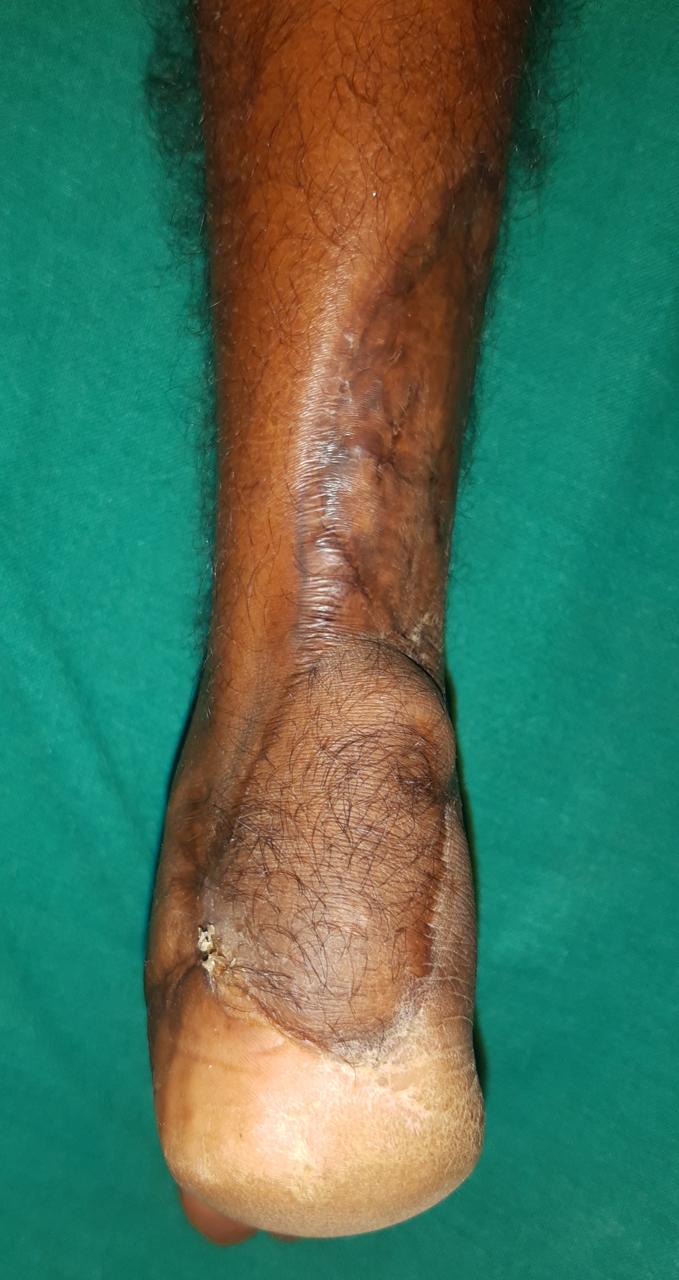


Flap Surgery
Flap surgery is a reconstructive technique used to repair areas of damaged or missing tissue by transferring healthy tissue (a "flap") from one part of the body to another. This is commonly needed after traumatic injuries, cancer surgery, or burns, as well as for chronic wounds or complex infections, like diabetic foot ulcers. The transferred flap may contain skin, fat, muscle, and sometimes bone, depending on the needs of the repair.
Types of Flap Surgery
- Local Flap: Tissue is moved from an area close to the defect. It remains attached at one end to preserve blood supply. Local flaps are often used when only small, nearby tissues are required for coverage.
- Regional Flap: Tissue is transferred from a nearby region with its own blood supply intact, useful when more extensive coverage is needed.
- Free Flap (Microsurgical Flap): Tissue is entirely detached from its original site and reconnected to blood vessels near the defect using microsurgery. Free flaps are used for large or complex reconstructions, like in the face, limbs, or breast.
- Muscle Flap: A flap that includes muscle tissue, often used to cover areas requiring bulk and good blood supply, helping to prevent infection and promote healing. Common for deeper wounds or areas lacking sufficient soft tissue.
- Fasciocutaneous Flap: Comprises skin and underlying fascia (a fibrous tissue layer), typically used for coverage with minimal bulk, such as in limbs.
- Perforator Flap: Tissue with its blood supply derived from small, perforating vessels, allowing for a thinner, more flexible flap with a reliable blood supply. These are used for intricate areas like the head, neck, or face.
Goals and Benefits
Flap surgery aims to restore form and function, cover exposed structures (e.g., bone or tendons), reduce infection risks, and provide robust, well-vascularized tissue for healing. For complex wounds, flaps offer a critical solution when direct closure is not possible or would impair function.